Average Homeowner Satisfaction Rating.
Years of Experience

We provide professional repointing services across North London, helping homeowners and businesses restore worn or damaged mortar and protect their properties from long-term damage.
30+ years of experience
Skilled Team
Expert Solutions
Preserve Property
Michael Rock has established a reputation as a trusted expert in repointing, pointing, chimney repairs, and brickwork restoration for properties in Acton, Barnet, Cricklewood, Crouch End, Ealing, Edgware, Finchley, Hampstead, Golders Green, Hendon, Highgate, Hornsey, Kenton, Muswell Hill, Stanmore, Swiss Cottage, West Hampstead, and Willesden.
Serving Homeowners Across North London


Professional & Insured Services
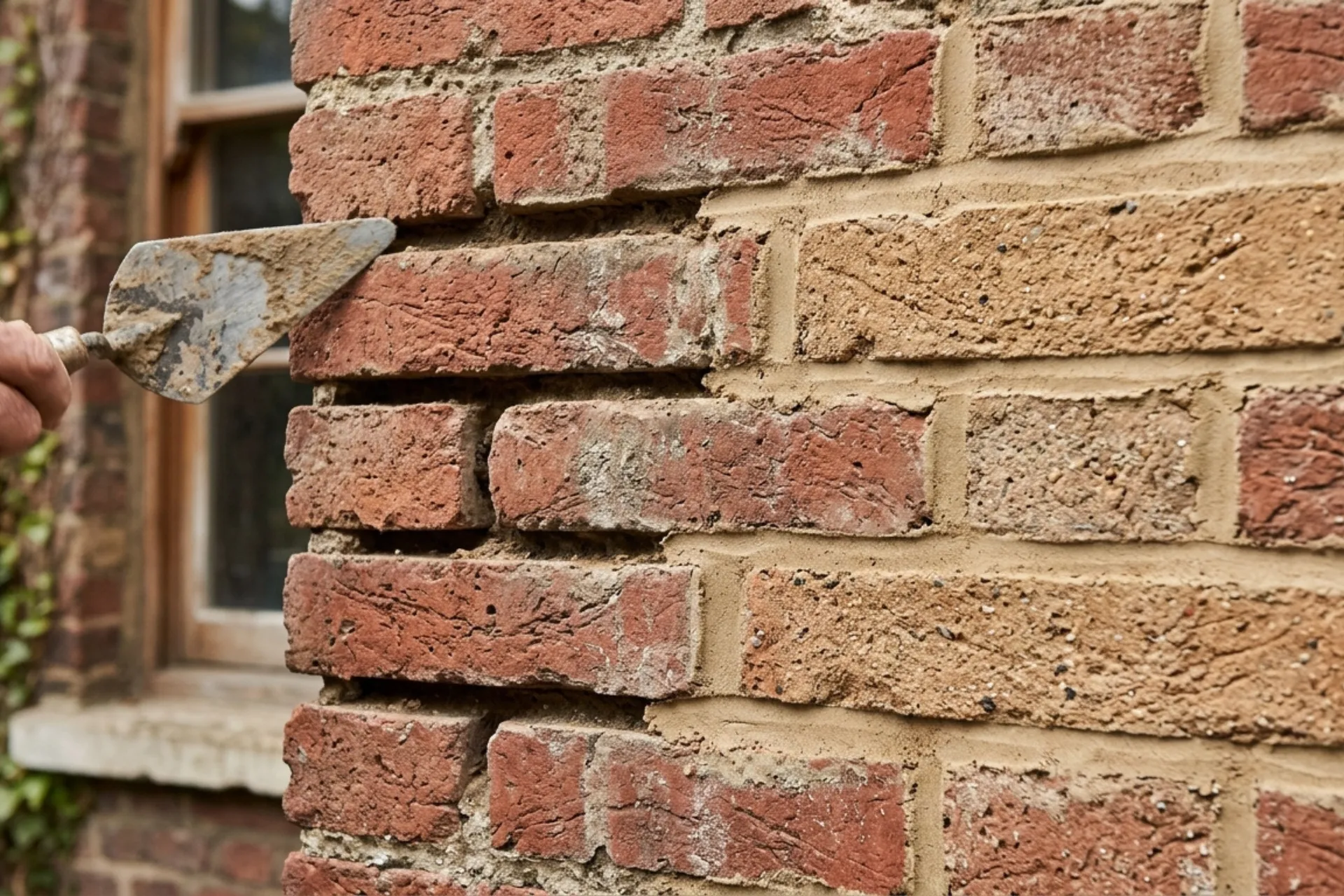
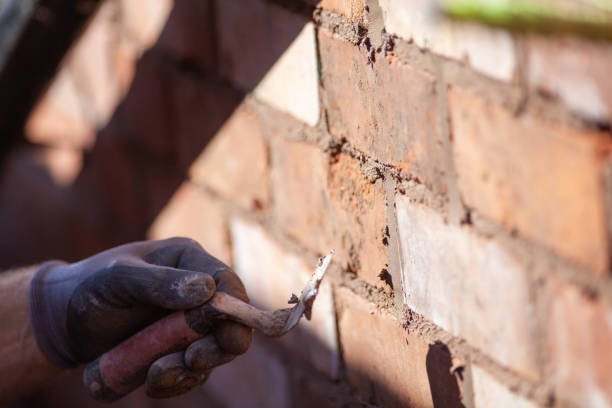
Most people notice the problem only when damp shows indoors. These signs come first
If the mortar sits well back from the brick face, or you can scrape it out with a key, it is no longer protecting the wall.
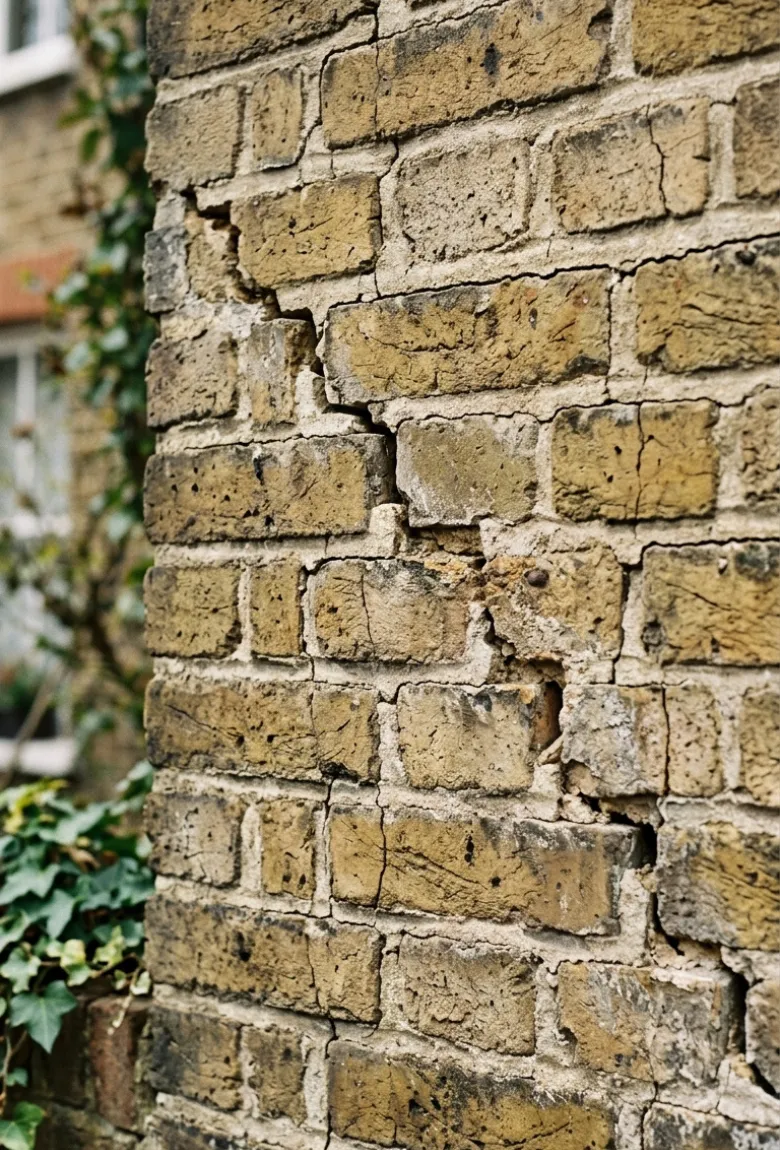
Fine cracks along the mortar beds let rain in. Cracks that step diagonally through the brickwork can point to movement, so we'll tell you if a structural engineer should look first.
Water getting through failed joints in solid-walled houses often shows as damp patches, blown plaster or peeling paint inside.
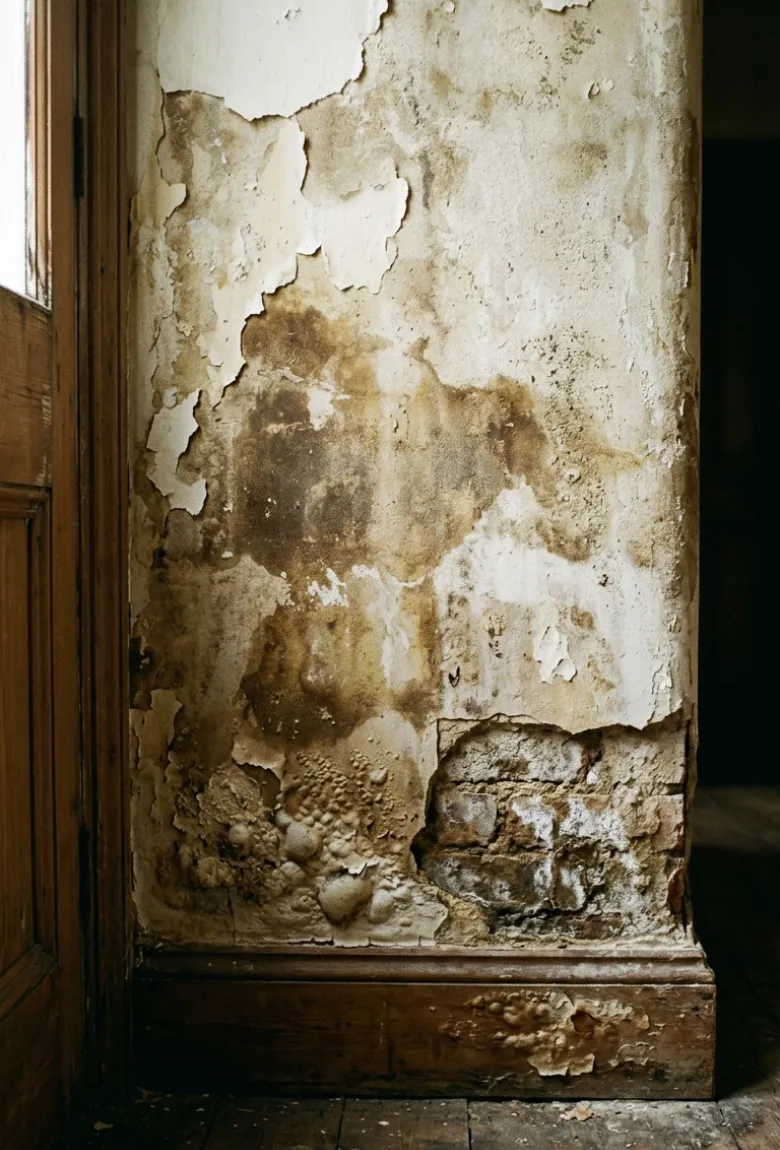
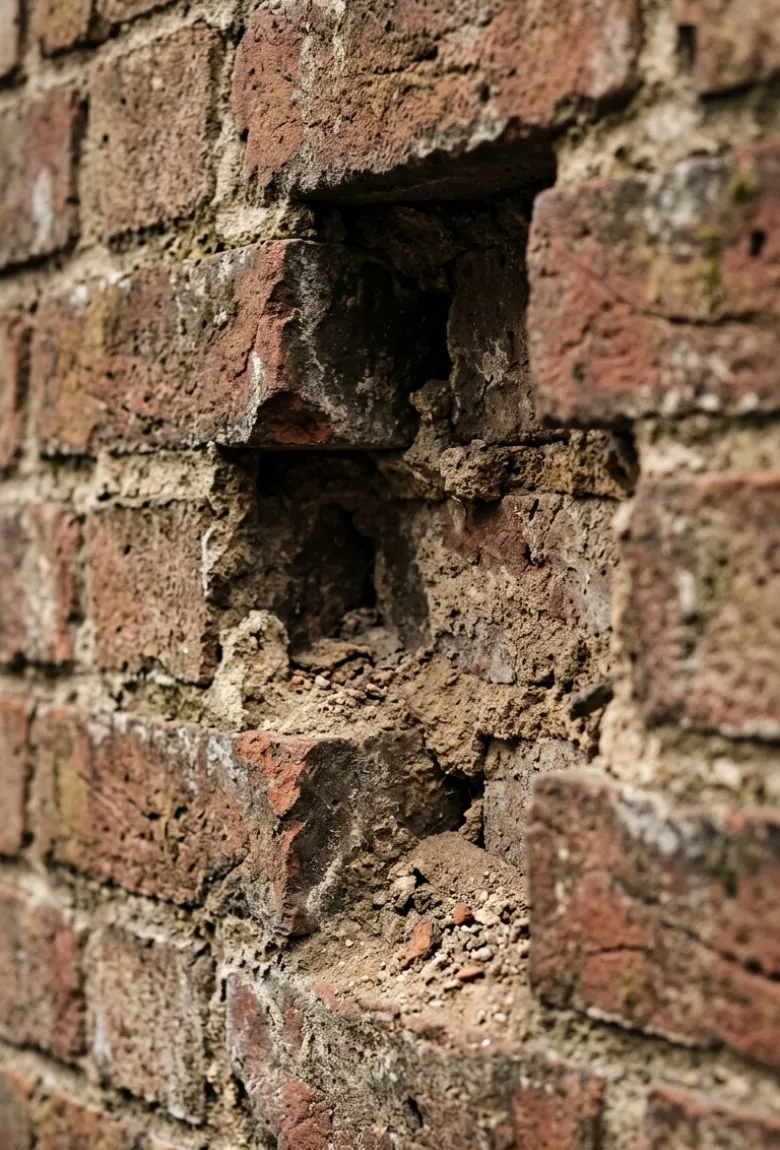
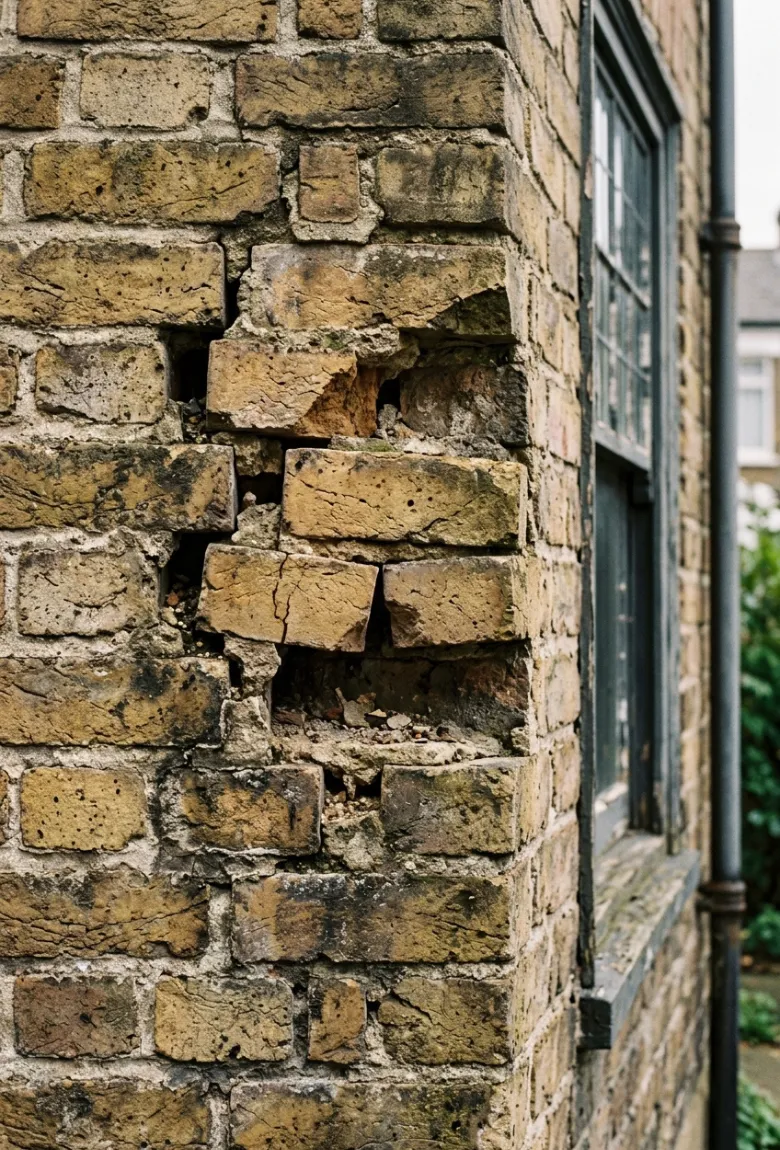
Once the mortar has gone, bricks can loosen, and bricks that take the weathering instead of the mortar can crack or flake (spalling). We can replace damaged bricks while we repoint: see our brick repair and replacement service.
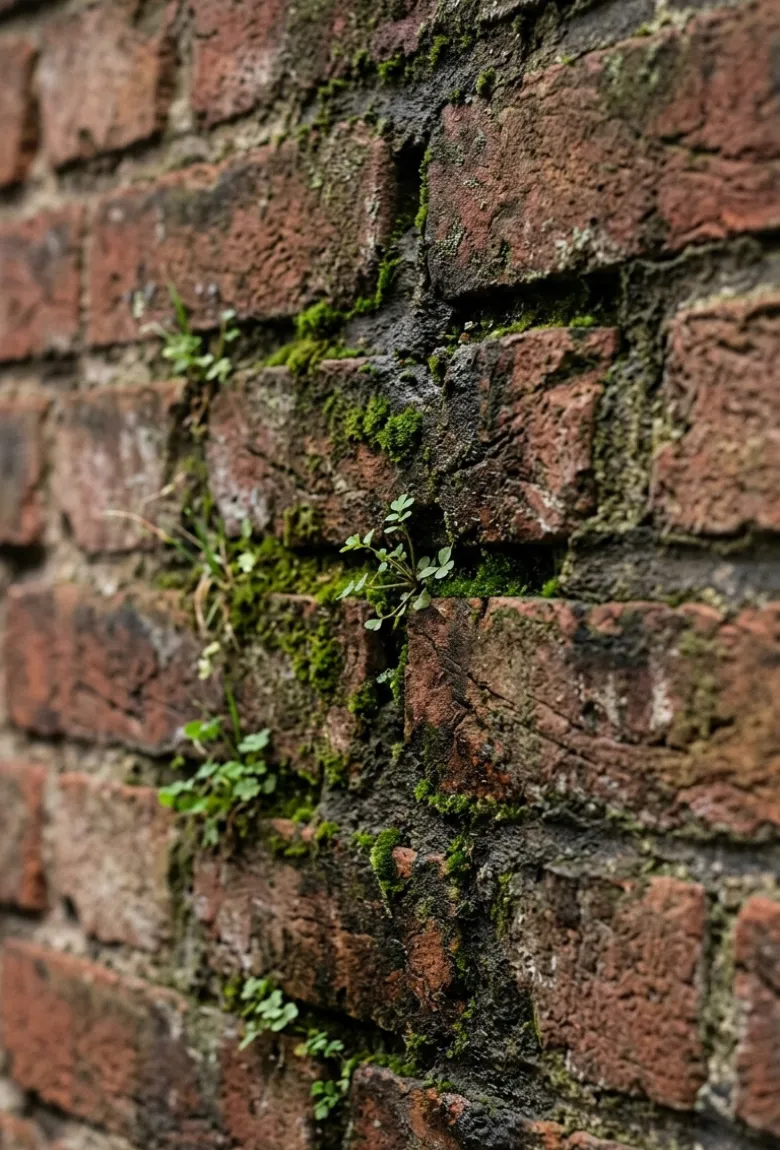
Moss and plants grow where the mortar is soft and holding water, and their roots open the joints further.
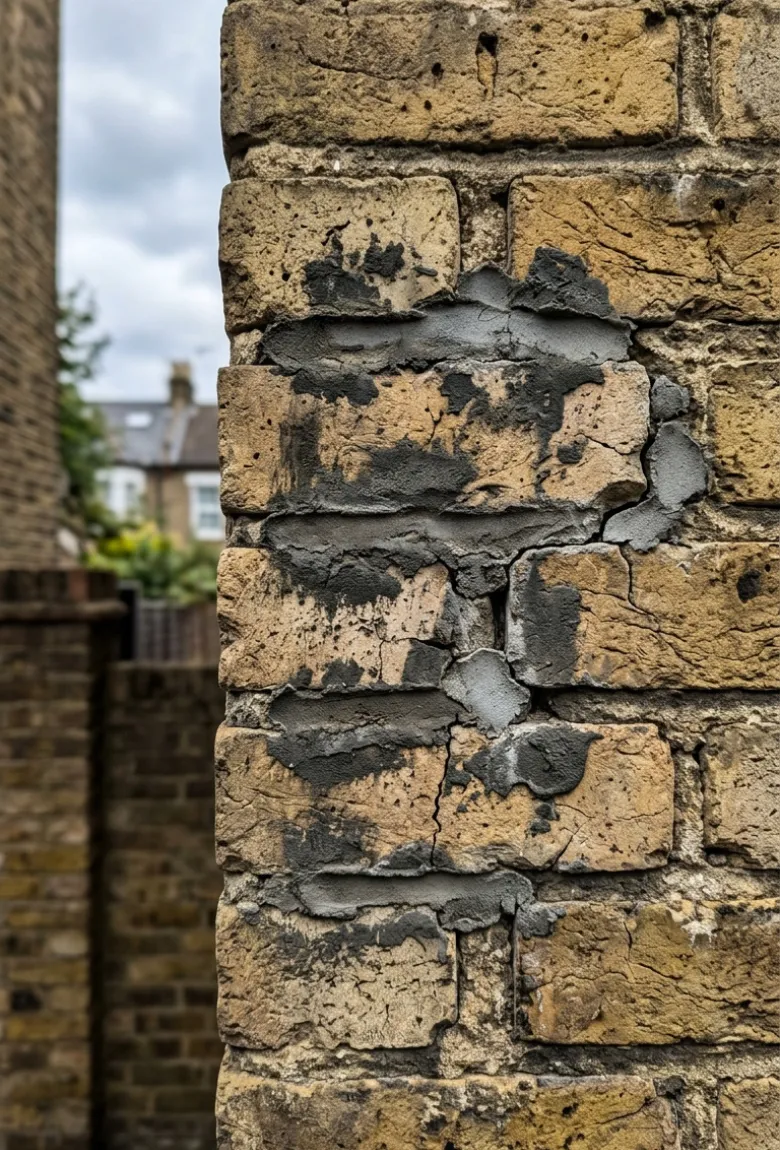
Patches of grey, hard cement on older brick often look out of place and can trap moisture. Putting poor pointing right is a common part of our work.
Mortar is an essential part of a brick wall, but it does not remain in perfect condition indefinitely. Understanding why joints have failed helps determine whether repointing alone is suitable or whether another underlying problem needs attention.
Exterior walls face repeated wetting and drying throughout the year. Exposed elevations, chimney stacks and parapet walls can experience particularly harsh conditions, gradually contributing to mortar erosion.
When absorbed moisture freezes and expands, it can place stress on weakened masonry. Repeated cycles may accelerate the deterioration of existing mortar joints, especially where water remains trapped.
Older mortar can lose cohesion through normal weathering. Poorly prepared joints, insufficient bonding or inappropriate finishing during previous work can also lead to premature failure.
Movement, defective rainwater goods or other moisture sources can cause joints to crack repeatedly. These problems should be investigated before repointing, as replacing mortar without addressing the cause may result in further deterioration.
“…Michael and his team transformed our old brick walls – professional, friendly, and highly skilled!”
Repointing is more than just cosmetic. It plays a crucial role in
Reinforces walls and ensures bricks remain secure.
Prevents water penetration, damp, and frost damage.
Maintains the integrity of period buildings while using materials appropriate for their age and style.
Clean, uniform joints improve the overall look of brickwork, chimneys, and garden walls.
We offer a wide range of repointing services tailored to different property types and requirements
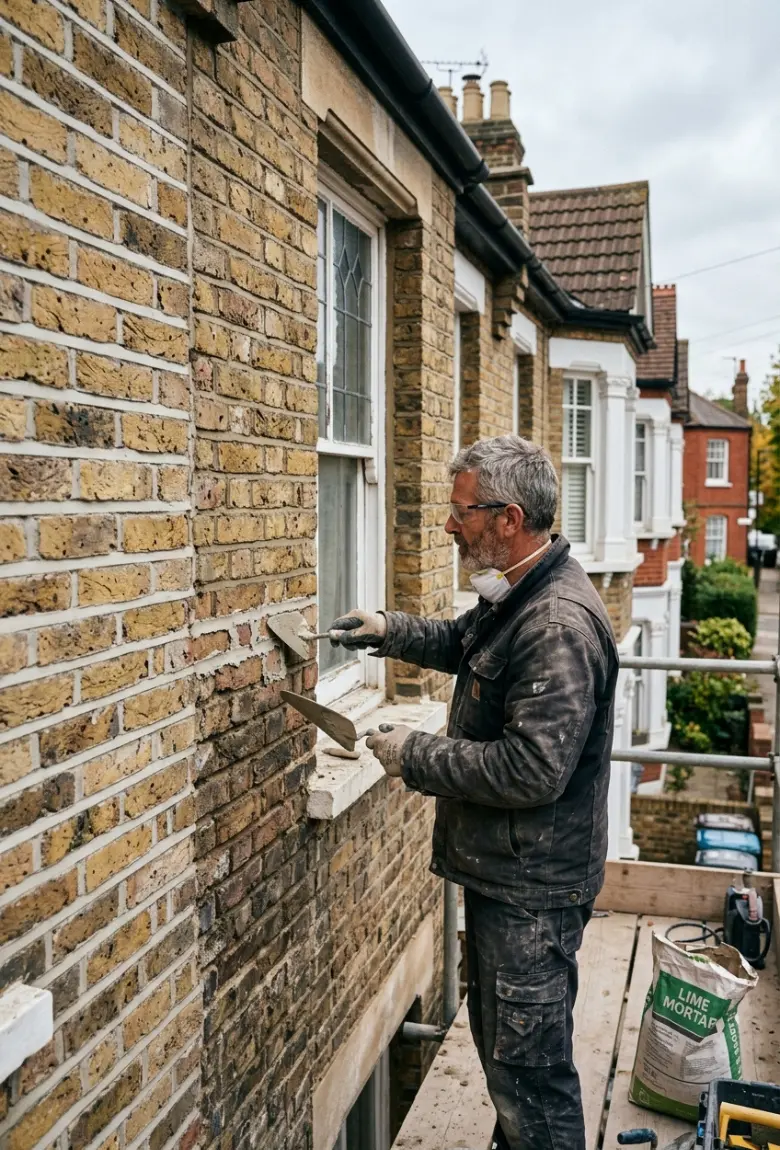
Front and rear elevations, side walls and bays on Victorian, Edwardian, inter-war and modern homes.
For older solid-walled houses we match the original mortar type, colour and joint finish. We repoint in lime mortar where the original was lime. See the pointing finishes we can match .
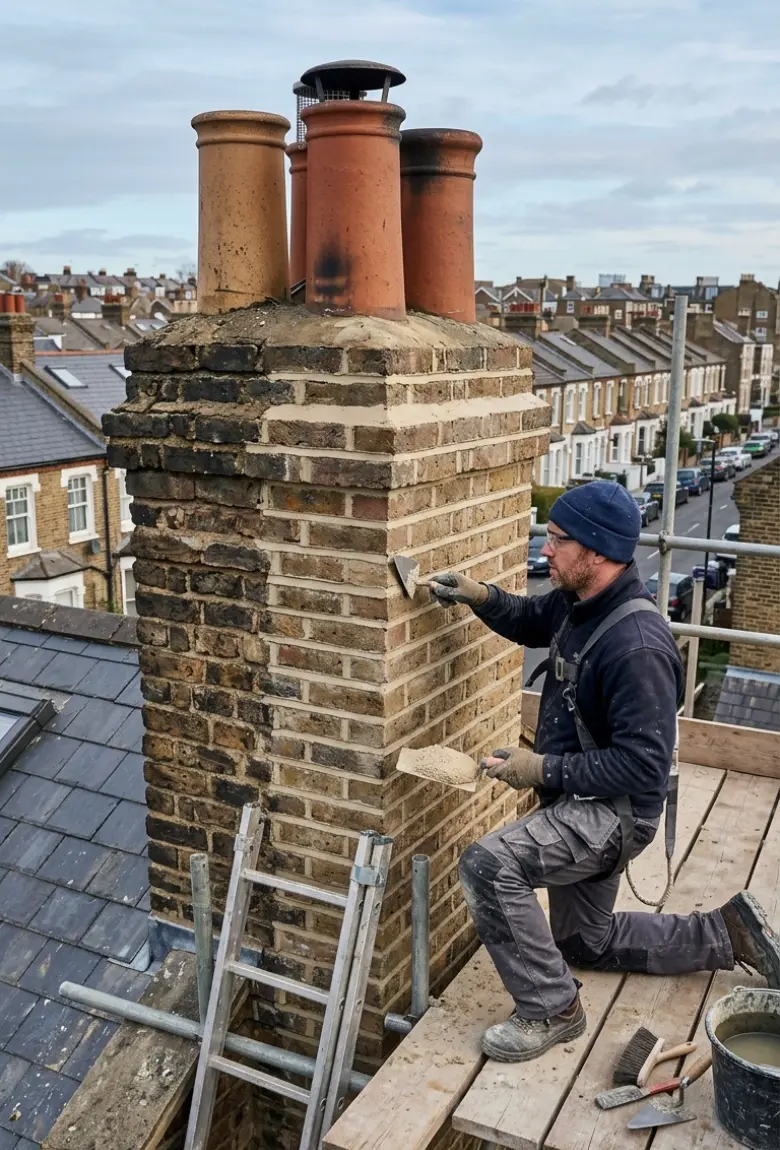
Chimney stacks take more weather than any other brickwork on a house, and failed pointing up there lets water in around the flashing and into the loft. See our chimney repairs and chimney repointing service, or chimney rebuilds if a stack is too far gone.
Parapets are exposed on both faces and on top, so their pointing fails early. See our parapet wall repairs.
Garden walls weather on both sides and often have plants growing out of the joints. See garden walls repaired and repointed.
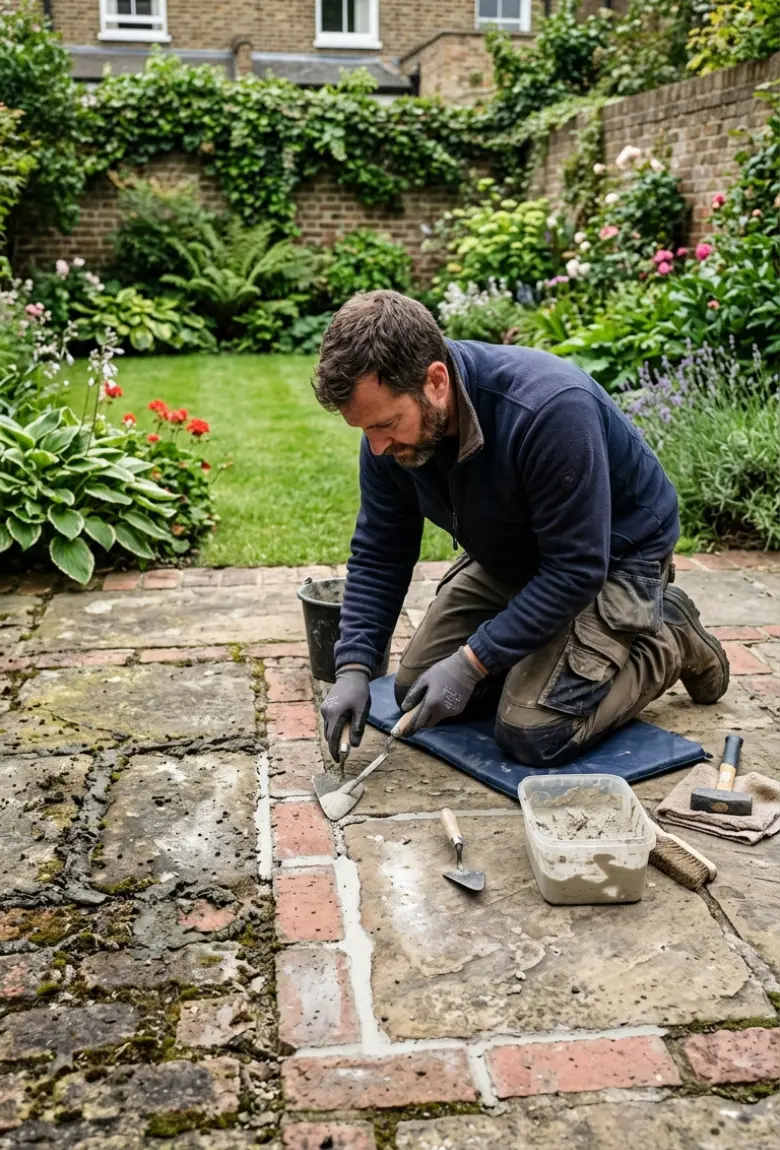
Loose and missing patio joints are a different job with different materials. See patio repointing and repairs.
Successful repointing involves more than filling visible gaps. The condition of the existing masonry, the age of the building and the compatibility of the new mortar all affect the finished result.
At MR Pointing & Brickwork, the appropriate method should be selected after assessing the existing mortar and surrounding bricks.
Lime-based mortar is often appropriate for older buildings constructed with softer or more porous bricks. It can accommodate limited movement and support moisture evaporation when specified correctly.
Lime mortar is not automatically the right choice for every property, so the existing construction and exposure conditions must be considered.
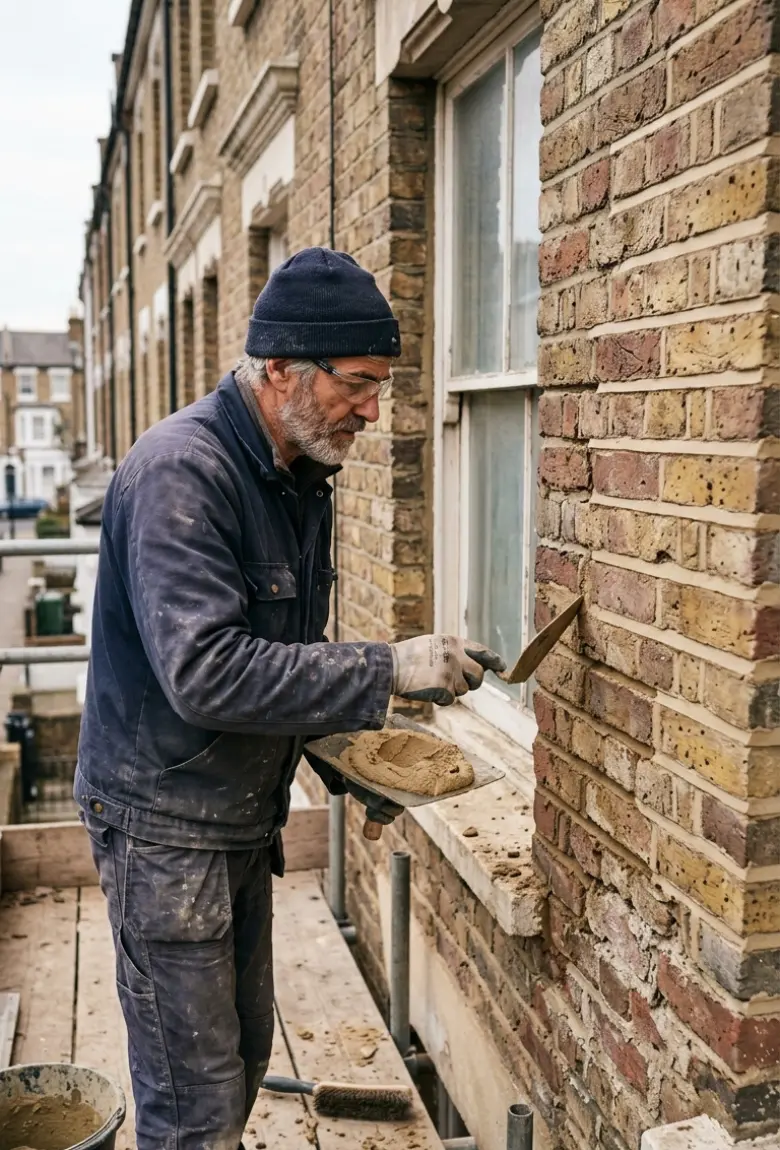
Modern brickwork may require a suitable cement-based or blended mortar, depending on the masonry and original specification. The aim is to achieve an appropriate balance of strength, adhesion and durability without unnecessarily restricting moisture movement.
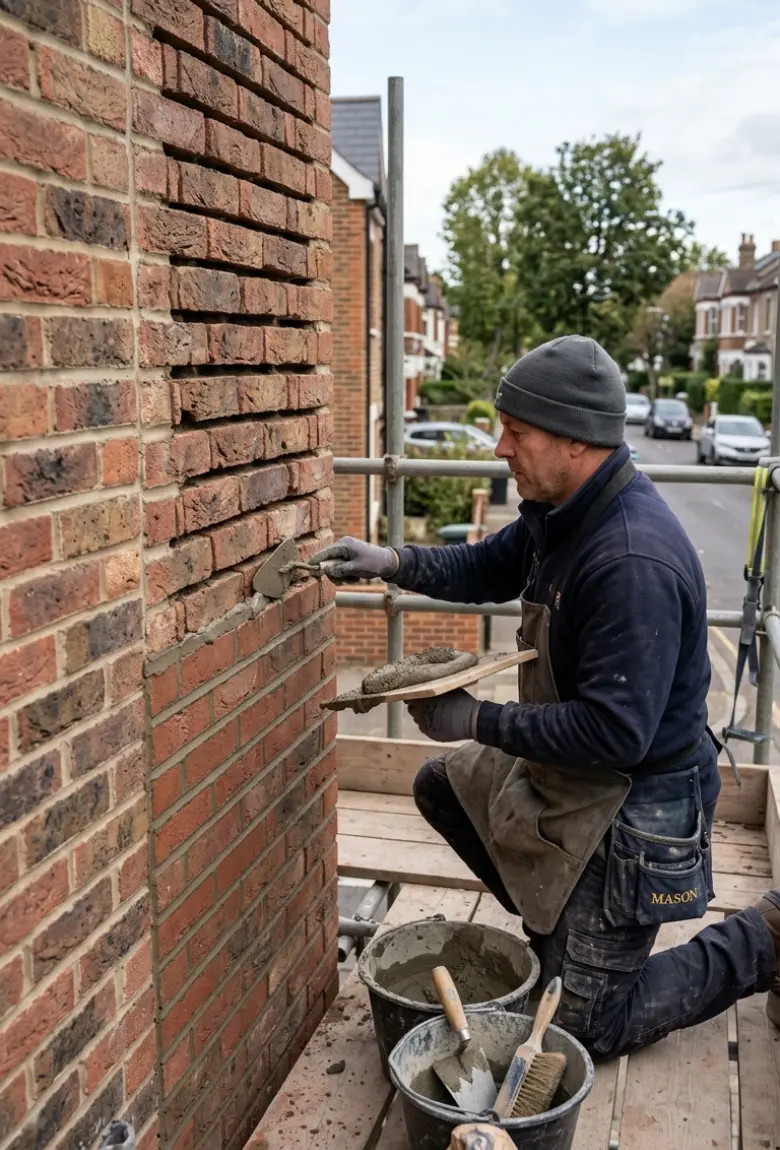
Old mortar must be removed to a suitable depth using methods that minimise damage to the brick edges. The joints are then prepared to receive new mortar. Additional care is particularly important where the bricks are fragile or historically significant.

The appearance and performance of repointed brickwork are also influenced by the joint profile. Flush, weather-struck and other finishes may be suitable depending on the building, existing detailing and exposure.
For more information about different joint profiles and finishes, explore our professional pointing services.
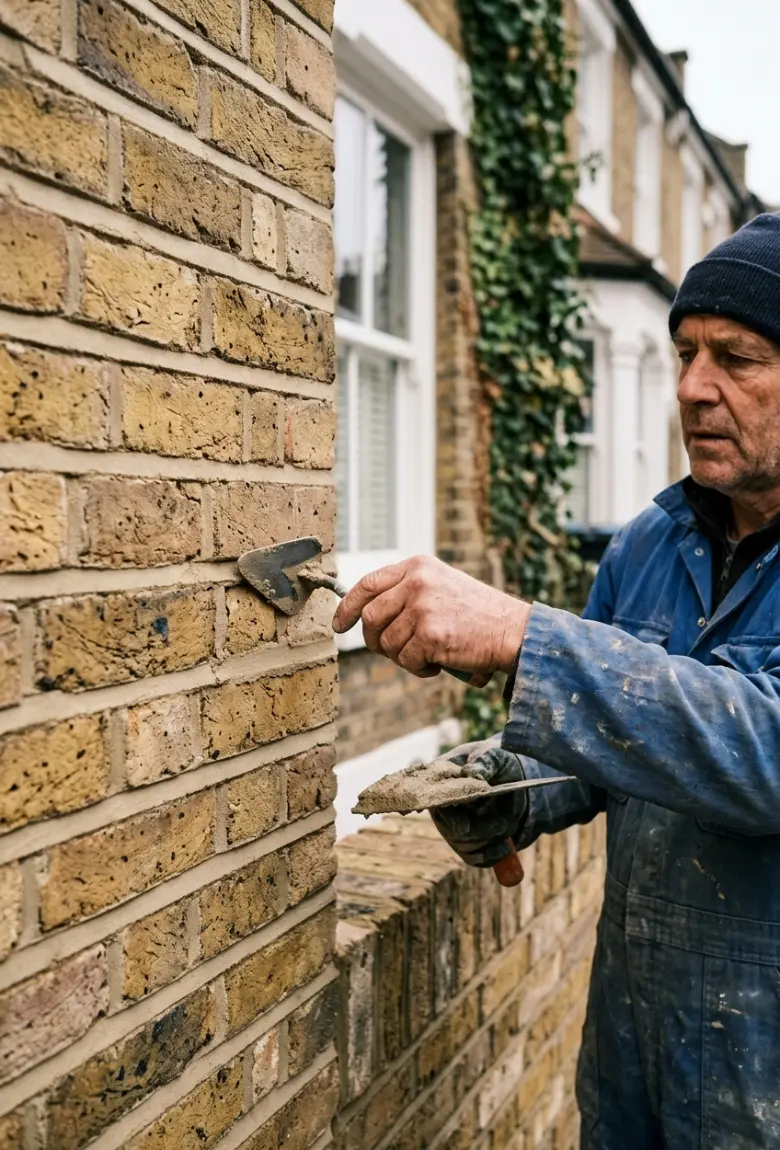
Not every damaged mortar joint means an entire wall needs repointing. The right approach depends on how much mortar has deteriorated, the condition of the surrounding brickwork and the underlying cause of the damage.
Our aim is to recommend work appropriate to the condition of your property, rather than automatically suggesting full repointing.
If the damage is limited to a few joints, visit our pointing repair services to learn about more targeted repairs.
Generally considered when mortar erosion affects substantial areas of a wall or elevation.
May be appropriate when defects are isolated and the surrounding mortar remains sound.
North London has a wide variety of Victorian, Edwardian and other traditionally built properties. Their brickwork often requires a different approach from modern masonry, especially when original mortar has deteriorated. Repointing a period building should respect the existing construction rather than simply create a uniform new finish.
The colour, texture and joint profile of new mortar can make a noticeable difference to a historic façade. Carefully selected materials and sympathetic finishing help preserve the character of the original brickwork.
Older brickwork may be vulnerable to damage from aggressive mortar removal or overly hard replacement materials. Suitable techniques and compatible mortar are important for reducing unnecessary stress on the masonry.
Many traditional solid brick walls manage moisture differently from modern cavity-wall construction. Inappropriate repairs can interfere with drying and potentially contribute to brick deterioration. For older properties, it is important to consider the whole wall, not just the visible joints.
Sometimes the bricks themselves are cracked, loose or heavily deteriorated. These defects may need separate attention before or alongside mortar-joint renewal. Where additional masonry work is required, explore our brickwork repair and restoration services.
Our structured approach ensures long-lasting and visually pleasing results
We look at the condition of the mortar and bricks, the age of the property, access and any damp, then give you a written quote.
We protect windows, doors, paths and plants, and arrange access.
Old mortar is removed to a consistent depth without damaging the brick edges.
Joints are brushed out and dampened so the new mortar bonds and doesn’t dry too fast.
Fresh mortar, mixed to match your property, is packed firmly into the joints in layers and finished in the joint style that suits the wall
Once the mortar has firmed up, the wall is brushed down and the site cleared. We’ll tell you how long the mortar needs to cure and what to watch for.
Most residential repointing jobs take 2 to 4 days, depending on the size and condition of the walls.
Work above ground floor usually needs scaffolding for safe access and an even finish. If it goes on the pavement, the council requires a licence.
Mortar mustn’t be laid in heavy rain or when frost is expected, because it needs to cure slowly. Lime mortar is more sensitive to cold than cement. We plan around the forecast and protect fresh work.
Raking out is dusty and noisy. We protect the area and clear up every day.
Not usually, as long as we have access to the outside walls and water.

Every job is priced after a site visit, because the same size wall can take very different amounts of work. The main things that affect the price are
to be repointed, and how many elevations.
whether scaffolding is needed, and how high or awkward the walls are (chimneys and parapets cost more to reach).
hard cement or very deep erosion take longer to rake out and fill.
lime mortars and matched colours take more care than a standard mix.
some finishes, like tuck pointing, are slower and more skilled.
brick replacement, brick cleaning or chimney repairs.
Choosing the right brickwork and pointing specialist is essential for protecting your property. Here’s why homeowners and businesses across North London trust us
Michael Rock has more than 30 years of hands-on expertise in pointing, chimney repairs, and brickwork restoration.
We understand North London architecture, weather conditions, and building materials, ensuring tailored solutions for your property.
Every project is completed to the highest standards, with attention to detail and durability in mind.
From minor repairs to major restorations, we handle all aspects of brickwork and pointing.
Honest quotes with no hidden fees, ensuring peace of mind.
We take pride in delivering exceptional results and building long-term relationships with our clients.
We proudly serve North London and surrounding areas, including
No matter where you are in North London, our team is ready to provide fast, reliable, and professional service. Not on the list? We often work in nearby areas too. Contact us to check.
Trusted by our happy clients
100% Trusted, 100% Tested – Building Better Homes!

Worn or missing mortar should not be ignored, particularly when deterioration affects large areas of your property. MR Pointing & Brickwork provides repointing services for homes, older buildings, garden walls and exposed masonry across North London.
Whether you need advice about ageing mortar or a quotation for extensive repointing, contact our team to discuss your brickwork and the most suitable next steps.
Pointing is the finished mortar at the face of the joints between bricks. Repointing is removing that mortar once it has worn out and replacing it. On an existing building, "pointing" and "repointing" are often used to mean the same job.
Most residential jobs take 2 to 4 days, depending on the size and condition of the walls and the access. A single chimney stack or garden wall is often quicker. We'll give you a timescale with your quote.
As a rough guide, walls generally need repointing every 15 to 20 years. Well-matched pointing on a sheltered wall can last much longer, and exposed walls, chimneys and parapets may need it sooner.
Yes, in suitable weather. Mortar can't be laid in frost or heavy rain because it needs to cure, so we plan around the forecast and protect fresh work. Lime mortar needs more care in cold weather.
We match the mortar's colour, texture and joint finish to your brickwork. New mortar always looks a little brighter at first and tones down as it weathers.
Usually, for anything above ground-floor level, because it gives safe access and an even finish. Low walls and small areas can often be done from ladders or a tower.
Small, low areas are possible for a confident DIYer, but it's easy to damage brick edges when raking out, use a mortar that's too hard for older brick, or leave a finish that looks patchy. For whole walls, chimneys or older properties, a professional job lasts longer and avoids damaging the bricks.
Like-for-like repointing doesn't normally need planning permission. If your property is listed, you'll usually need listed building consent for work that changes its character, such as a different mortar or joint finish, so check with your council first.